One example. Each student explores their own repertoire.
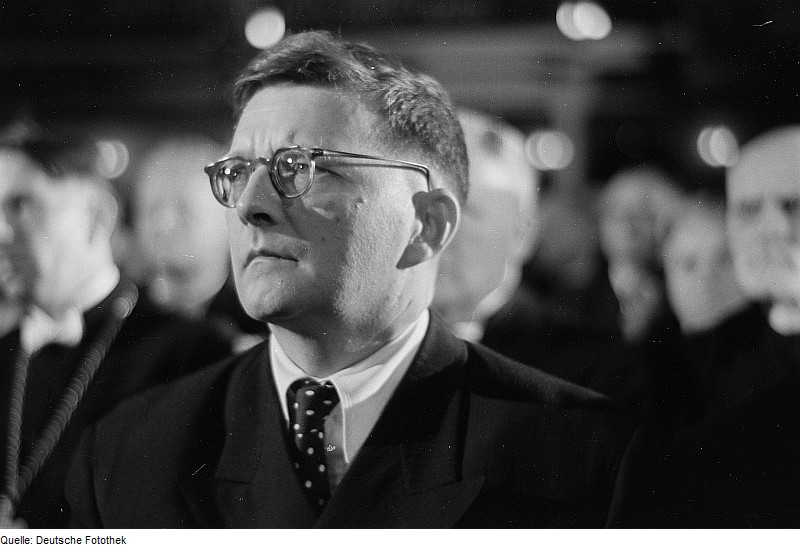
This Shostakovich journey is one example. Each student explores their own repertoire. At Kuznetsov Piano Lab, research becomes a performance decision: listen to contrasting artists, question the evidence, mark the score, and test ideas at the piano with Artem. The goal is not to copy a famous pianist, but to develop an interpretation you can explain.
Chapter 01
Meet the Work
Beyond the Score · An example
Each student explores the history, artistry, and interpretations behind the music they’re preparing. Here, we follow Shostakovich.
The contemporary report states that Nikolayeva, competing as no. 11, offered the jury its choice of any of the 48 preludes and fugues from Bach’s Well-Tempered Clavier. It does not establish that she performed all 48 during the competition.documented fact
The publisher’s work record identifies the Leipzig visit and Bach Competition as the origin, states that the cycle was written with Nikolayeva in mind, and lists her complete premiere on 23 December 1952 at the Glinka Concert Hall in Leningrad.documented fact
Interview recorded on 16 October 1992 and translated at the time, with the website transcription later edited by Sergey Zaks. Nikolayeva dates her first complete set to 1961 and says Shostakovich listened to that recording, was very pleased and thanked her. Her “later recording is different” remark concerns a subsequent studio set, not the December 1992 BBC film. DOREMI dates the linked historical release to January 1962, so this exploration records the date discrepancy rather than claiming the interview conclusively identifies that exact track.media provenance
The label catalog identifies the complete Op. 87 recording as recorded in January 1962. This conflicts with Nikolayeva’s retrospective 1961 date and therefore establishes the linked release’s catalog provenance, not the identity of the recording discussed in her interview beyond doubt.media provenance
DOREMI / Tatiana Nikolaeva Topic · YouTube hosted player
Official Topic track in DOREMI’s album playlist for DHR-7991-3. DOREMI catalogs the recording as January 1962. Playback remains in YouTube’s hosted player; no media is copied.media provenance
No. 15 begins at 1:19:56. This complete-cycle transfer remains a manual fallback because its owner blocks third-party embedding (YouTube error 150). This exploration does not use it for automatic endpoint tracking.media provenance
No. 15 begins at 14:54. The film is an independent later performance, not the recording referenced by the interview quotation. No exact ending boundary is asserted.
Beyond the Score: Music in Context
Dmitri Shostakovich
Prelude and Fugue No. 15 in D-flat major
Op. 87Composed 1950–51
How to use this dossier
Listen with a reason. Write before the reveal.
Each recording appears beside the task it supports. Scan the QR code, listen only to the stated passage, and record a specific observation. Answers are included for review and can be removed from a later student edition.
01Meet the WorkAbout 5 min performance + exploration and discussion
02One Pianist, Two InterpretationsAbout 6 min performance + comparison and score work
03The 11-Note MysteryAbout 5 min media + score work and analysis
04The Prelude Hidden Inside the FugueAbout 5 min media + score work and experiments
05A Fugue Under ScrutinyAbout 5 min media + activities; optional video +5 min
Chapter 01
Meet the Work
About 5 min performance + exploration and discussionOwner review draft
History, Bach, Leipzig, and the architecture of the 24 keys.
Step 01 / 05
Leipzig, 1950: Where the story begins
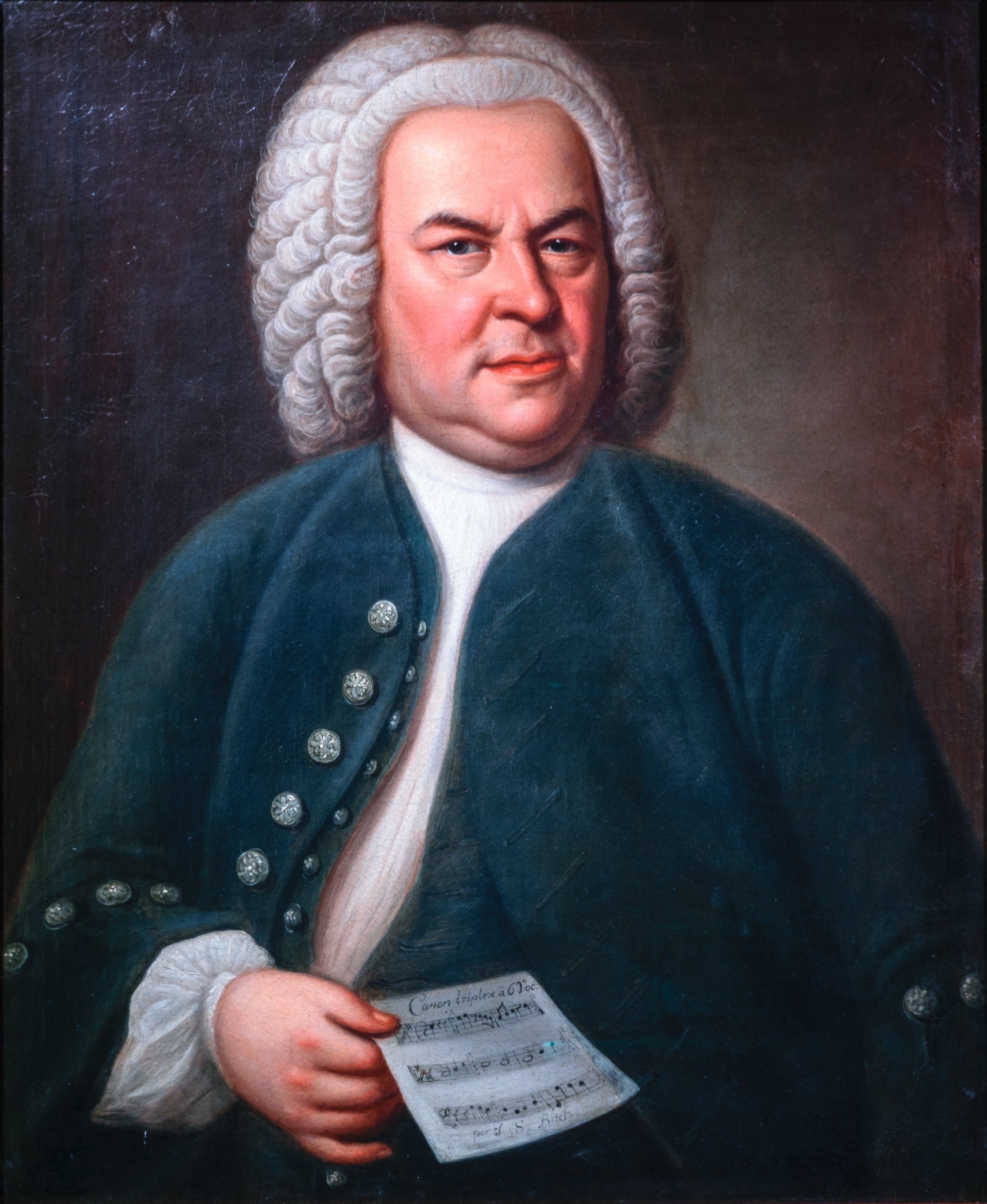
Shostakovich went to Leipzig with the Soviet delegation for celebrations marking 200 years since Bach’s death and served on the jury of the first International Bach Competition. In the piano division, 26-year-old Tatiana Nikolayeva arrived ready to play any of the 48 preludes and fugues from Bach’s Well-Tempered Clavier that the jury requested; she won first prize. The official Shostakovich archive identifies the Leipzig Bach celebrations as the impulse for Op. 87. The publisher’s work record says Shostakovich wrote the cycle with Nikolayeva in mind, and she gave its complete premiere in Leningrad on 23 December 1952. These facts explain the Bach–Nikolayeva–Op. 87 connection; they do not assign a hidden program to No. 15.
Step 02 / 05
The result: a cycle of 24 pairs.
Composed in 1950–51, Op. 87 contains a prelude and fugue in every major and minor key. You will explore No. 15 in D-flat major. Number fifteen takes us into two contrasting worlds—and invites us to discover what connects them.
Step 03 / 05
Two different journeys through 24 keys.
Both composers pair a prelude with a fugue in every major and minor key, but they choose different routes through those keys. Work out each route from the visible sequences before checking the explanation.
Compare entries 1–4 first. Then follow the complete lists and locate Shostakovich’s No. 15.
Bach · each book of The Well-Tempered Clavier
1C major
2C minor
3C-sharp major
4C-sharp minor
5D major
6D minor
7E-flat major
8E-flat / D-sharp minor
9E major
10E minor
11F major
12F minor
13F-sharp major
14F-sharp minor
15G major
16G minor
17A-flat major
18G-sharp minor
19A major
20A minor
21B-flat major
22B-flat minor
23B major
24B minor
Shostakovich · Op. 87
1C major
2A minor
3G major
4E minor
5D major
6B minor
7A major
8F-sharp minor
9E major
10C-sharp minor
11B major
12G-sharp minor
13F-sharp major
14E-flat minor
15D-flat major
16B-flat minor
17A-flat major
18F minor
19E-flat major
20C minor
21B-flat major
22G minor
23F major
24D minor
QuestionWhat organizing rule does each composer use, and in which key is Shostakovich’s No. 15?
Bach’s organizing rule
Shostakovich’s organizing rule
No. 15 is in
Answer
Bach: chromatic ascent, pairing each major key with its parallel minor. Shostakovich: major keys travel around the circle of fifths, each followed by its relative minor. No. 15 is in D-flat major.
Step 04 / 05
Listen to the performance
Tatiana Nikolayeva premiered the complete cycle and worked closely with Shostakovich on his music. She later recalled that he liked her early recording of the complete preludes and fugues. Here, we hear her early interpretation of No. 15.
Recordings for comparison
Step 05 / 05
Chapter Review
Use these four points to tell the story in your own words.
1
The encounter. In 1950, Shostakovich traveled to Leipzig for the Bach bicentenary celebrations and served on the competition jury.
2
The pianist. Tatiana Nikolayeva was prepared to play any of Bach’s 48 preludes and fugues. She won first prize and later gave the complete premiere of Shostakovich’s Op. 87.
3
Bach’s order. Bach moves up by half steps, pairing each major key with its parallel minor.
4
Shostakovich’s order. Shostakovich follows the circle of fifths, pairing each major key with its relative minor. No. 15 is in D-flat major.
Chapter 02
One Pianist, Two Interpretations
About 6 min performance + comparison and score workOwner review draft
Compare Tatiana Nikolayeva’s early recording with a 1992 film, then separate historical evidence from artistic judgment.
Step 01 / 03
Hear the whole work
Before we compare recordings, listen to Tatiana Nikolayeva play the complete Prelude and Fugue No. 15. As you listen, notice how the character changes from the Prelude to the Fugue. Is there a moment or an interpretive choice that stays with you?
Where do you hear the biggest difference in how she shapes the music? Then try the same comparison on your own with the opening of the Fugue. What catches your ear there?
Step 03 / 03
Chapter Review
Nikolayeva returned to the same piece thirty years later and made different musical choices. What would you borrow from her 1962 recording? What would you borrow from her 1992 performance? Use Score Mapping™ to mark any ideas you want to try. Play those passages and see which choices you’d keep in your own interpretation.
Chapter 03
The 11-Note Mystery
About 5 min media + score work and analysisOwner review draft
A guided pitch-class inquiry into the unusually chromatic Fugue subject.
Step 01 / 04
Follow the subject through the Fugue.
Look at the first six measures of the Fugue in Petrushansky’s score video below. Pause the video to trace the opening subject from its first note to its last. It can start on a different pitch later.
Recording for this task
Task
Follow the score through the complete fugue. Each time you spot it, stay with that voice to the end. How many can you follow?
Step 02 / 04
Count identities, not registers or spellings.
C4 and C5 belong to one pitch class because octave placement does not change pitch identity. C-sharp and D-flat also occupy one chromatic position here, even though their notation and musical function can differ.
C4 + C5one pitch class: C
C♯ + D♭one chromatic position here
QuestionHow many different pitch classes do C4, C5, C-sharp and D-flat represent?
Task
Look at the examples above. Count pitches an octave apart only once. Count two spellings of the same piano key only once too. Now apply that rule to the first six measures of the Fugue in Petrushansky’s score video. Pause the video while you count.
Question
Count C4, C5, C-sharp and D-flat: how many different pitch classes do these four names represent?
Step 03 / 04
Eleven appear. Which one is absent?
Look at the first six measures of the Fugue in Petrushansky’s score video. Pause the video and note each pitch class the first time it appears, counting octave repetitions and enharmonic spellings only once. Then use the twelve buttons below to select the pitch class absent from the subject. The answer is checked against Alexander Rosenblatt’s published analysis.
Use bars 1–6 in your own score. Circle each pitch class the first time it appears, combining octave repetitions and enharmonic spellings.
Rosenblatt identifies G-natural as the omitted pitch class. Eleven pitch classes do not by themselves make the subject a conventional twelve-tone row, which uses all twelve in an ordered series.
Step 04 / 04
Chapter Review
1
You now know where every subject entry occurs, and you’ve marked it in your score.
2
The opening statement of the fugue subject uses eleven of the twelve pitch classes in the chromatic scale.
3
When the subject is transposed, the missing pitch shifts by the same interval.
Chapter 04
The Prelude Hidden Inside the Fugue
About 5 min media + score work and experimentsOwner review draft
Use a documented structural connection to plan and explain a performance choice.
Step 01 / 03
Can you hear the connection?
The Prelude and Fugue can sound like opposites. Listen to the complete pair and follow the score on screen. Can you hear anything from the Prelude returning in the Fugue? Notice both the rhythms and the sound of the ending.
Recording for this task
Task
Listen to the complete Prelude and Fugue with the score on screen. Where do you hear echoes of the Prelude in the Fugue? Pause at any passage that catches your ear and note which measures connect and what you hear in common.
Question
What returns, and how does it sound different?
My first experiment: □ bring the returning rhythm forward □ keep it beneath the Fugue subject
Write one balance or articulation change you will test:
Step 02 / 03
A familiar sound returns.
The scholar Mark Mazullo points out that the Prelude’s lively accompaniment rhythm returns in the Fugue at measure 116. It interrupts the Fugue’s restless texture, bringing a familiar sound into a very different world. Toward the end of the Fugue, Mazullo finds another connection: the chords bring back the sound of the Prelude’s ending, but with notes that shift and make the familiar sound less settled.
Recording for this task
Task
Find these connections in the score. Play the passage twice: first bring the familiar sound forward, then let it sit in the background. Which version tells the story more clearly to you?
Question
Can you hear how the two endings speak to each other?
Step 03 / 03
Chapter Review
You heard the Prelude rhythm return in the Fugue, and the Prelude’s closing chords echoed near the end. At the piano, bring those echoes forward and decide how obvious they should be to the listener.
Chapter 05
A Fugue Under Scrutiny
About 5 min media + activities; optional video +5 minOwner review draft
Different musical judgments—and how historical perspectives can influence interpretation.
Step 01 / 06
Listen to the whole work before judging the opening.
Hear Eliso Virsaladze play the complete Prelude and Fugue.
Recording for this task
Task
As you listen to Virsaladze’s Prelude and Fugue, choose several interpretive ideas you love. Mark them in your score using Score Mapping™ and label them EV. Then try those ideas at the piano and hear what changes.
Step 02 / 06
One Fugue, a contested reception.
In 1941, Shostakovich won a Stalin Prize for his Piano Quintet. Seven years later, the Communist Party condemned his music, and he lost his teaching posts in Leningrad and Moscow. In 1951, a Soviet music journal reported that the D-flat Fugue had been called “unbearably cacophonous.” The same report noted that supporters heard “great depth and substance” in the cycle as a whole.
Step 03 / 06
A later performer hears a siren.
After practicing the Fugue over and over, Ivan Sokolov stopped. In the next room, a television program about the siege of Leningrad played an old air-raid siren. In that sound, he recognized the subject he’d just been playing. He began to hear a city under bombardment and, amid the chaos, he imagined a child on a wooden horse. This is Sokolov’s own imaginative interpretation, not Shostakovich’s declared program and not proof that the siren was consciously encoded in the score.
Before watching Sokolov, invent your own image or analogy for the Prelude and another for the Fugue. In your score, mark one audible feature that supports each image. Then watch the optional Russian original from 13:49 to 18:25 and decide whether Sokolov’s association changes, strengthens or leaves your own hearing unchanged.
“I was stunned… it was as if I was shown what this music was about.”Ivan Sokolov, recalling the moment in 2006; translated from Russian
Question
What is your own analogy for the Prelude and for the Fugue, and which audible feature supports each image?
Step 04 / 06
Chapter Review
Listen to the opening of the Fugue again. What in the music might have made Sokolov think of a siren? Name one detail, even if it brings a different image to mind.
Recording for this task
Step 05 / 06
Hear the whole work again.
Listen to Richter play the complete Prelude and Fugue. If you hear an interpretive choice you love, mark it in your score using Score Mapping™ and label it SR.
Choose one relevant question that the five chapters did not answer and investigate it independently.
Task
Choose a question about the work, explain what you found, and identify your sources clearly. Discuss how the evidence could affect a performance decision. This public example collects no answers or student work.
Source record
Evidence behind the dossier
Links are printed for verification. Recording QR codes appear beside the task that uses them.
Fugue No. 15 in D-flat major, Op. 87
Alexander Melnikov / harmonia mundi · official YouTube Topic release
The label-provided standalone Fugue track identifies Melnikov, Shostakovich and the 2010 release. The 0:00–0:20 teaching window is an opening excerpt, not a claim about an exact bar or phrase boundary.https://www.youtube.com/watch?v=M6ORuENBr7Y
24 Preludes & Fugues, Op. 87: No. 15 in D-flat major
Report on the first International Bach Competition
Sovetskaya Muzyka, no. 10 (1950), p. 46
The contemporary report states that Nikolayeva, competing as no. 11, offered the jury its choice of any of the 48 preludes and fugues from Bach’s Well-Tempered Clavier. It does not establish that she performed all 48 during the competition.https://mus.academy/archive/number/143/page/46
Interview recorded on 16 October 1992 and translated at the time, with the website transcription later edited by Sergey Zaks. Nikolayeva dates her first complete set to 1961 and says Shostakovich listened to that recording, was very pleased and thanked her. Her “later recording is different” remark concerns a subsequent studio set, not the December 1992 BBC film. DOREMI dates the linked historical release to January 1962, so this exploration records the date discrepancy rather than claiming the interview conclusively identifies that exact track.https://www.bruceduffie.com/nikolayeva2.html
Tatiana Nikolayeva, Vol. 1 · DHR-7991-3
DOREMI Records
The label catalog identifies the complete Op. 87 recording as recorded in January 1962. This conflicts with Nikolayeva’s retrospective 1961 date and therefore establishes the linked release’s catalog provenance, not the identity of the recording discussed in her interview beyond doubt.https://www.doremi.com/Nikolayeva.html
DOREMI / Tatiana Nikolaeva Topic · YouTube hosted player
Official Topic track in DOREMI’s album playlist for DHR-7991-3. DOREMI catalogs the recording as January 1962. Playback remains in YouTube’s hosted player; no media is copied.https://www.youtube.com/watch?v=b3dNgO2pYLo
Tatiana Nikolayeva · Op. 87 complete-cycle transfer · No. 15
YouTube · external manual fallback
No. 15 begins at 1:19:56. This complete-cycle transfer remains a manual fallback because its owner blocks third-party embedding (YouTube error 150). This exploration does not use it for automatic endpoint tracking.https://www.youtube.com/watch?v=qRxdF7tRNYE&t=4796s
Tatiana Nikolayeva · Prelude and Fugue No. 15 · 1992 film
YouTube · original hosted player
No. 15 begins at 14:54. The film is an independent later performance, not the recording referenced by the interview quotation. No exact ending boundary is asserted.https://www.youtube.com/watch?v=dQPS7CmZlHM&t=894s
Red Insight: Socio-Tonal Battles of Dmitri Shostakovich
Contemporary journal report, criticism on archive page 30; collective support is continued on page 31. It calls the D-flat Fugue “невыносимо какофоничная” and summarizes supporters of the cycle as finding “большую глубину и содержательность.” The second phrase is the journal’s collective summary, not a direct quotation from Yudina or Nikolayeva and not necessarily limited to No. 15.https://mus.academy/archive/number/151/page/30
К обсуждению 24 прелюдий и фуг Д. Шостаковича — continued
Sovetskaya Muzyka, no. 6 (1951)
The journal collectively summarizes supporters of the cycle as finding “большую глубину и содержательность.” This is not a direct quotation from Yudina or Nikolayeva and is not necessarily limited to No. 15.https://mus.academy/archive/number/151/page/31
Lecture 191: Shostakovich, Preludes and Fugues, Op. 87
Ivan Sokolov · original YouTube lecture
In the excerpt at 13:49–18:25, Sokolov recalls seeing a televised tour of St Petersburg’s Blockade Museum while learning the Fugue in 2006. A demonstrated Leningrad air-raid siren prompted his personal wartime reading, followed by child imagery and a Wozzeck association. The dossier identifies this as Sokolov’s interpretation, not Shostakovich’s documented intention. Russian autogenerated captions were checked for navigation and remain imperfect; no long caption transcript is reproduced.https://www.youtube.com/watch?v=cQ-UYZX0uWE&t=829s
Avdeeva · The closing connection · 15:02
Yulianna Avdeeva · official artist YouTube channel
Discussion and demonstration of Prelude reminiscence and returning coda chords toward the Fugue ending; companion context at 8:08–8:27. Automatic transcript checked; no precise Fugue measure number asserted.https://www.youtube.com/watch?v=XFz415HONb8&t=902s
Prelude and Fugue No.15 · Boris Petrushansky · score video
Советские Композиторы (@sovcomp) · YouTube
Uploaded February 13, 2023. Description and both music metadata entries credit Boris Petrushansky. Full pair, visible score; embedding availability does not establish independent reproduction rights.https://www.youtube.com/watch?v=ZRn9wSt4uDo
 APPLY FOR A CONSULTATION